

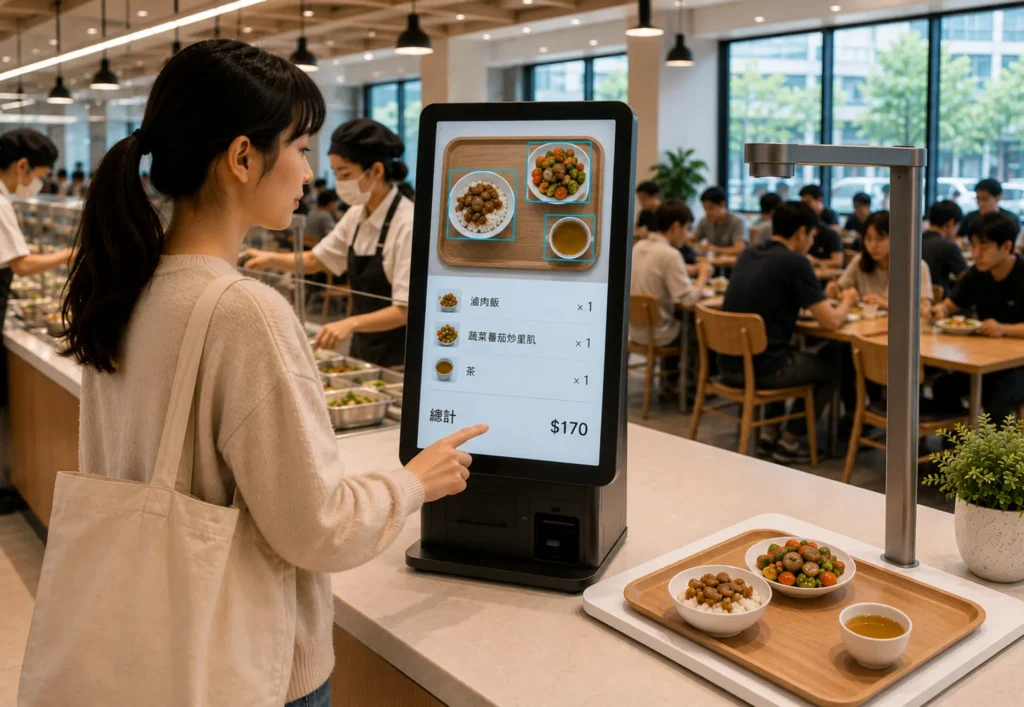
What It Takes to Adopt AI in a Cafeteria:
5 Key Considerations from Planning to Deployment
More and more cafeterias—including school dining halls, factory canteens, and corporate employee restaurants—are beginning to explore AI as a way to improve efficiency, enhance the dining experience, and ease ongoing labor pressure.
But implementing AI is far more complex than simply installing a new system.
In practice, when AI projects underperform, the issue is rarely the technology itself. More often, it comes down to unclear goals, insufficient preparation, and a lack of alignment before implementation begins.
So what should cafeteria operators think through before bringing AI into their operations?
1. Clearly Define the Real Operational Problem First
The first step is not selecting a solution—it’s identifying the problem that actually needs solving. Common pain points include:
- Slow checkout during peak hours
- Long queues and waiting times
- Labor shortages leading to inconsistent service quality
- Lengthy staff onboarding and training cycles
- Frequent ordering or payment errors
Different problems require very different AI approaches. If AI is adopted simply because it is “trending,” it often results in systems that are feature-rich but fail to meaningfully improve day-to-day operations.
2. Identify Which Processes Are Truly Suitable for AI
Not every process should be automated. In general, AI performs best in environments that are:
- Highly repetitive
- Rule-based
- Structurally consistent
- Labor-intensive
Typical use cases include:
- Pre-meal or post-meal checkout workflows
- Sales, consumption, and operational data analysis
- Food waste tracking and analysis
Meanwhile, areas like customer service, complaint handling, and on-site problem solving still depend heavily on human judgment and experience. AI is strongest at handling repetition—not replacing hospitality.
3. Ensure Your Operations Are Already Standardized
A common misconception is that AI can “fix” messy or inconsistent operations. In reality, AI works best when built on top of a well-structured foundation.
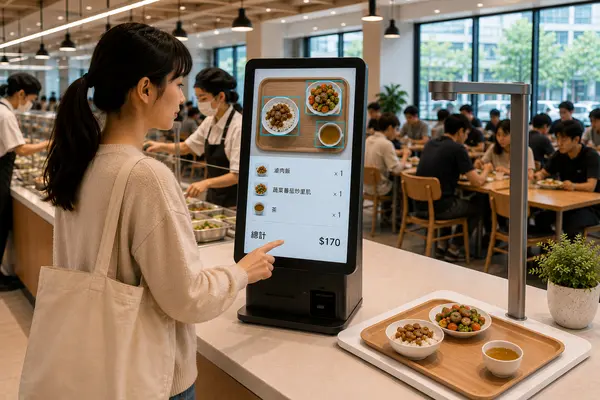
For example, AI meal recognition only works when what it “sees” can be clearly matched to how items are defined in the POS system.
In practice, cafeterias often have small but important gaps between what is served and how it is recorded—for example, how combo meals are defined or how items are structured in the system.
When these definitions are not aligned, the AI may still identify the food correctly, but it becomes difficult to consistently translate that result into the right item in the system. As a result, end-to-end automation becomes less reliable.
AI works best when the way items are defined in the POS system matches how they are actually served.
4. Evaluate System Integration and Infrastructure Requirements
AI implementation is rarely just a plug-and-play solution. In most cases, it needs to connect with multiple existing systems, such as:
- POS systems
- Payment platforms
- Camera or sensor hardware
- Cloud infrastructure
- Back-end management dashboards
When evaluating a solution, it is important to look beyond functionality alone. Key questions include:
- How well does it integrate with current systems?
- Will additional hardware be required?
- What are the long-term maintenance costs?
- Can it scale easily across multiple locations?
Solutions that integrate smoothly into existing workflows tend to have a much higher chance of successful deployment.
5. Set Clear, Realistic, and Measurable Goals
AI is not a magic switch. It won’t automatically cut labor in half or transform operations overnight. Instead of expecting broad transformation, define specific, measurable outcomes such as:
- Faster checkout times
- Shorter queues during peak hours
- Fewer manual input errors
- Higher throughput during busy periods
- Reduced repetitive workload for staff
- Improved customer satisfaction and experience
The more concrete the goals, the easier it becomes to evaluate whether the implementation is actually working.
Successful AI Adoption Starts with Well-Defined Operations
AI in cafeterias is not about building a futuristic dining experience. It’s about solving real operational constraints in everyday environments.
As labor shortages continue and expectations for speed and convenience increase, operators are being pushed to do more with less.
In this context, AI is not here to replace staff, but to reduce repetitive work and improve consistency—so teams can focus on service, food quality, and the overall dining experience.
But the real limitation is rarely the AI itself. It’s whether the underlying operations are structured enough for AI to work in the first place. AI does not transform operations. Well-designed operations make AI possible.
(The featured image was generated using ChatGPT’s AI tools for illustrative purposes only.)