

AEON Japan Introduces AI Image Recognition
for Bakery and Sushi Self-Service Labeling
In recent years, AI-powered image recognition has rapidly expanded across the retail sector. Beyond smart self-service cafeterias, automated bakeries, and cashierless stores, Japan’s leading retailer AEON is now integrating AI recognition into core supermarket operations.
At its newly opened “AEON Tsudanuma South” store in March 2026, the company has deployed AI image recognition in both the self-service sushi section and the in-store bakery. The system automatically identifies products and prints labels, streamlining the labeling process in self-service areas. This not only improves operational efficiency and enhances the customer experience, but also represents one of the most significant real-world applications of AI in Japanese supermarket operations to date.
AI in the Bakery: Automated Product Recognition and Labeling
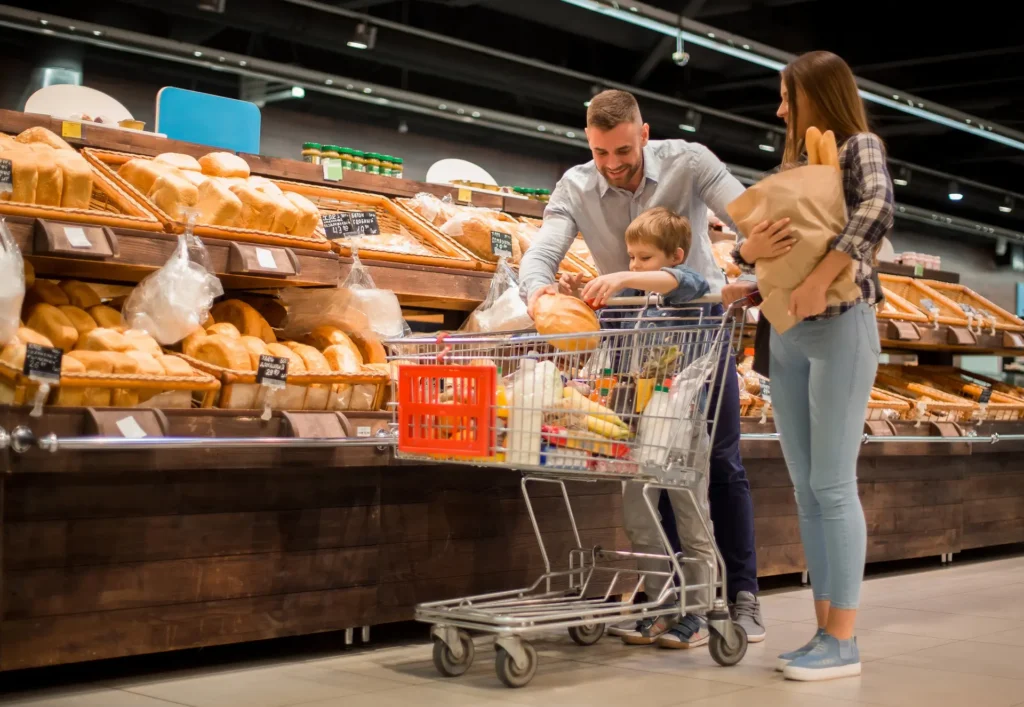
The first-floor bakery at Tsudanuma South offers around 90 freshly made items, including beef croissant sandwiches, bagel sandwiches, cheese bread, Swiss rolls, and a wide range of sweet pastries.
Bakery products present a well-known challenge for retail automation: they often look similar, lack standardized barcodes, and vary widely in price. As a result, product identification has traditionally relied heavily on manual work, making it one of the most labor-intensive areas in store operations.
In conventional workflows, staff either manually entered product information at checkout or assisted customers at labeling stations to identify and tag each item individually. Both approaches are time-consuming and require significant labor resources.
To address this, AEON introduced an AI image recognition system that enables self-service labeling. Customers simply place all selected bakery items under a scanning device at once. The system captures the items, identifies each product based on visual features, matches them against a product database, and calculates the total price. A single label is then printed with all item details and the final total.
This removes the need for item-by-item processing, significantly simplifying operations while reducing labor requirements.
For retailers, the benefits include:
- Fewer human errors in product handling
- Lower training requirements for staff
- Higher operational efficiency
- Better support for large SKU ranges
For customers, the experience improves through:
- More accurate product identification
- Faster product labeling process
- A smoother self-service process
AI in the Sushi Section: Enabling Flexible Pricing and Free Selection
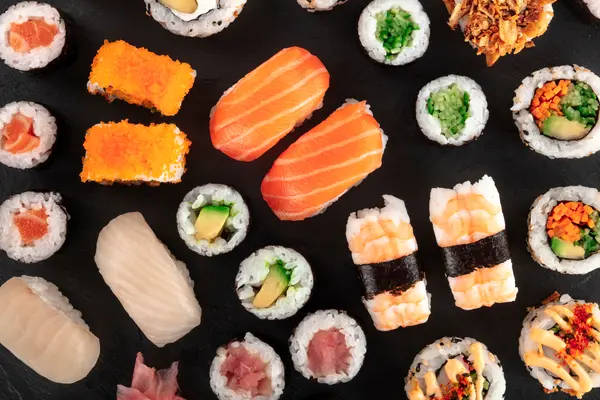
AEON has also applied AI image recognition to its sushi counter. At the Tsudanuma South store, a dedicated “Sushi Buffet” section offers around 50 varieties, including tuna, salmon, scallops, shrimp, gunkan-style sushi, and seared options. Customers can freely select items and purchase them individually rather than being limited to pre-set platters.
Before the introduction of AI, although single-piece purchasing was available, pricing was typically handled using a flat-rate model based on total quantity. This simplified operations but failed to reflect meaningful cost differences between ingredients. Premium items such as fatty tuna, sea urchin, and scallops were effectively priced the same as lower-cost items like tamago or tuna rolls.
With AI image recognition, each sushi piece is identified based on its visual characteristics and mapped to a product and pricing database. The system then calculates the final total automatically, even when multiple types of sushi are mixed in a single purchase. This ensures that pricing accurately reflects the items the customer selected.
AI Image Recognition Is Becoming a Core Part of Retail Operations
The AEON case highlights how AI image recognition is moving beyond pilot projects and into day-to-day supermarket operations, particularly for non-standardized products such as bakery goods and sushi.
Unlike barcode-based items, these products are visually similar, highly diverse, and price-sensitive—making them an ideal use case for computer vision systems.
As the technology matures, AI image recognition is expected to become a standard capability across food retail operations, helping retailers improve efficiency while enabling faster, more seamless shopping experiences.
[Reference]
1. “イオンスタイル津田沼サウス/MZ世代向けMD強化、食・コスメ特化型の新店オープン。” 取材・執筆 古川勝平。流通ニュース、https://www.ryutsuu.biz/report/s031871.html.
2. “イオン初の駅ビル「イオンモール津田沼サウス」を見てきた。焼肉赤門など飲食店街、スーパーには寿司バイキング。” 編集部:丸山花梨。Travel Watch Impress、https://travel.watch.impress.co.jp/docs/news/2093855.html.
3. “イオンモール津田沼Southがグランドオープン! 実食含む体験レポ オープニングセットも。” 編集部のつぶやき(千葉・船橋・市川・習志野・鎌ケ谷・松戸)。まいぷれ、https://narashino.mypl.net/article/tsubuyaki_chiba/107292.