

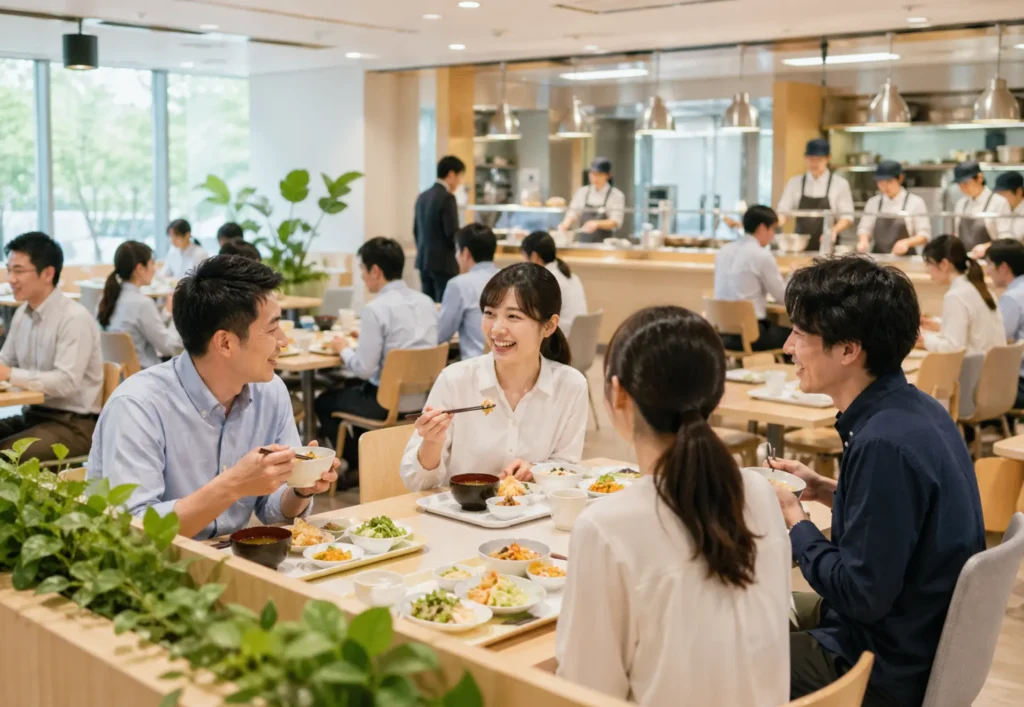
Cafeteria Operations in 2026: Rethinking How AI Changes Work
For operators of cafeterias in hospitals, schools, factories, and large companies, labor shortages are no longer temporary—they are part of daily operations. This is especially visible in Japan, where data from the Ministry of Health, Labour and Welfare shows that job openings have continued to outnumber job seekers for years. The gap is even wider in foodservice, where in some areas there are more than three openings for every applicant 1.
The issue is no longer whether to hire more people, but how to keep operations running when there simply aren’t enough workers. The focus has shifted from staffing levels to how to get more done with the people available.
Labor Shortages Are Hard to Close
Foodservice work is physically demanding and fast-paced, and it is becoming less appealing to younger workers. When positions remain unfilled, it is common for one person to take on several roles. Over time, this can lead to a familiar pattern: short staffing, rushed training for new hires, heavy workloads, and then people leaving. Turnover stays high, and the cycle continues.
In cafeterias at hospitals, schools, factories, and large companies, the pressure is especially clear. Meal times are concentrated, and large numbers of people need to be served in a limited period. When there aren’t enough staff, tasks that were once separate—food prep, serving, cashiering, and cleaning—often fall to the same person or a small team. This may keep things moving for a while, but problems gradually appear.
One of the first is inconsistency in food quality. When preparation is interrupted or rushed, it becomes harder to keep each meal at the same standard. Food safety is another concern. Under HACCP guidelines, it is best to limit how often tasks are switched in order to reduce the risk of cross-contamination. But when one person is handling multiple duties, switching between tasks becomes frequent, and it is harder to maintain consistent hygiene practices.
Over time, another issue becomes clear: operations rely too heavily on individual experience. As more locations are added, differences between sites become more noticeable, and management becomes more difficult.
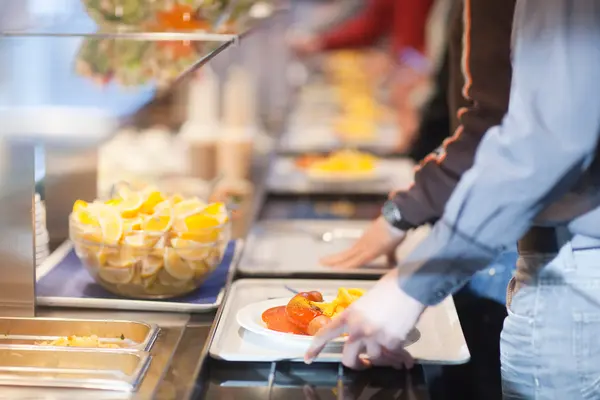
Automation Helps People Focus on What Matters
When one person has to handle many tasks, it is often a sign that parts of the operation could be automated.
Technology is sometimes seen as a way to reduce headcount, but a more practical goal is to use people more effectively—placing them where they add the most value.
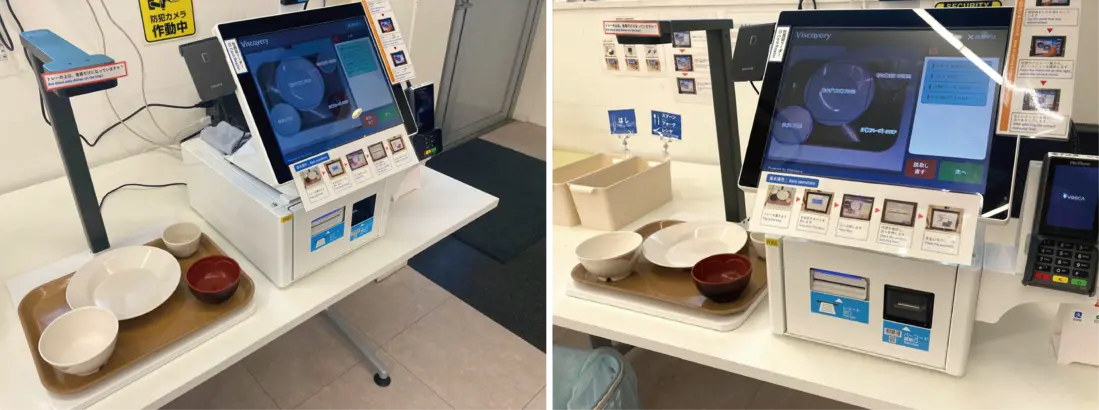
For example, AI-based image recognition can be used at checkout. It can identify dishes before payment or used dishes after the meal, completing tasks that used to require manual input. This allows staff to step away from the register.
Instead of staying at the cashier station, staff can focus on more important on-site work, such as restocking dishes, keeping an eye on the dining area, helping manage lines, and maintaining cleanliness. These tasks may not directly show up in sales numbers, but they are essential for smooth and stable operations. Over time, they also help improve service and the overall dining experience.
Better Data, Not Just Faster Operations
Many cafeterias already use POS systems to track sales and revenue. However, there is still a gap between these numbers and what actually happens in the dining area.
Operators often want to know more than how much was sold. They want to understand which dishes are picked most often, which are left uneaten, and how choices change at different times of the day. These details can be captured through image recognition and are key to improving purchasing and menu planning.
Without this level of detail, many decisions have been based on experience. For example, how much food to prepare is often adjusted based on past habits or rough estimates, which makes it hard to reduce waste.
This is why more cafeterias have started using AI image recognition in recent years. When both consumption and leftovers can be clearly tracked, it becomes easier to plan portions and design menus more accurately.
From Cost Center to Source of Insight
In the past, cafeterias in companies and schools were often seen simply as a cost—something that needed to run smoothly, but not something to improve beyond that. As labor becomes harder to secure, operators are looking for ways to maintain stable operations with fewer people.
As more data is collected, it becomes possible to see patterns in what people choose to eat, what they prefer, and even how balanced their meals are. This information can be used to adjust purchasing, refine menus, and improve daily operations. Decisions become less dependent on personal judgment and more based on clear information.
A Turning Point for Cafeteria Operations
Labor shortages are pushing cafeteria operators to rethink how their operations are set up. The old approach—relying on people to cover every task—is becoming harder to sustain.
The next step is not just hiring, but helping staff move away from repetitive work and focus on tasks that require attention and judgment. At the same time, technology and data can support ongoing improvements.
With more stable operations and clearer information, cafeterias can run more efficiently and reduce food waste. For operators, this is not only a way to respond to labor shortages, but also an opportunity to redesign how their cafeterias work.
(The featured image was generated using ChatGPT’s AI tools for illustrative purposes only.)
[References]
1 “一般職業紹介状況(令和8年3月分及び令和7年度分)について。” 厚生労働省。https://www.mhlw.go.jp/stf/newpage_72811.html.