

Bakery Café on the Rise:
How Taiwan’s Bakeries Are Evolving and How AI Can Help
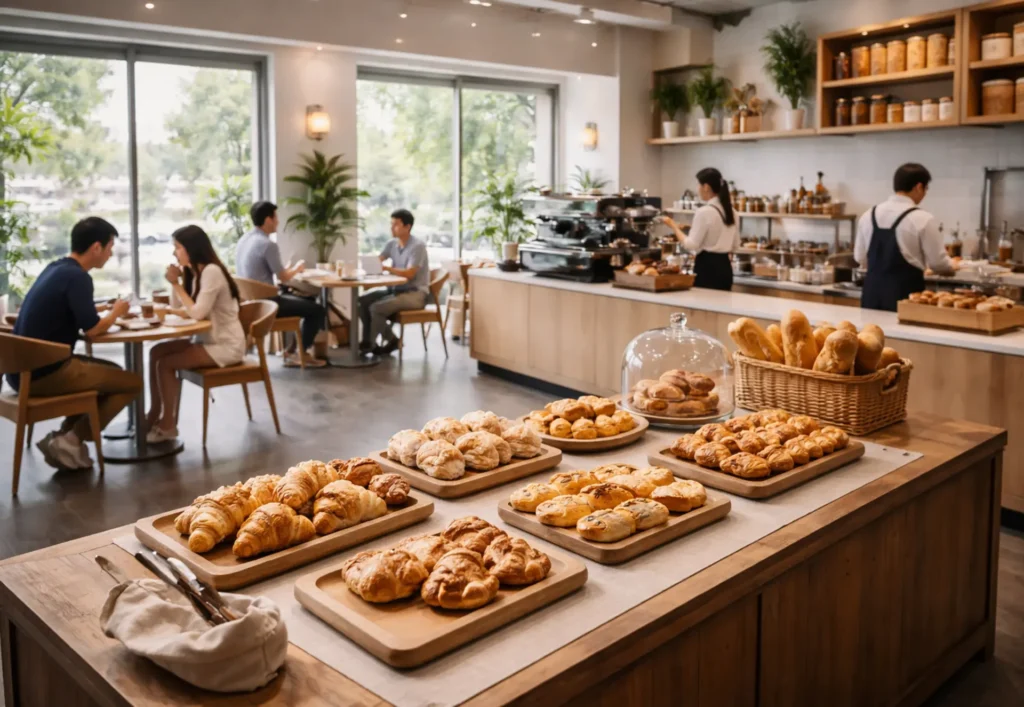
In Taiwan, most bakeries still operate as grab-and-go shops, and full dine-in concepts are relatively rare. But a clear shift is underway: the line between bakeries and foodservice is starting to blur.
At the 2026 Taipei International Bakery Show, Namchow Group centered its exhibit on “foodservice.” That choice reflects a broader trend—baked goods are no longer just standalone products; they’re becoming part of a larger dining experience. As bread expands into desserts, light meals, and even full plates, the role of the store is changing. It’s no longer just a place to buy something—it’s a place where customers spend time 1.
While this shift is still emerging in Taiwan, it’s already well established in other markets.
When Bread Is Everywhere, Competition Changes
To understand where things are heading, it helps to look at Taiwan’s current landscape: bakeries are no longer competing only with other bakeries.
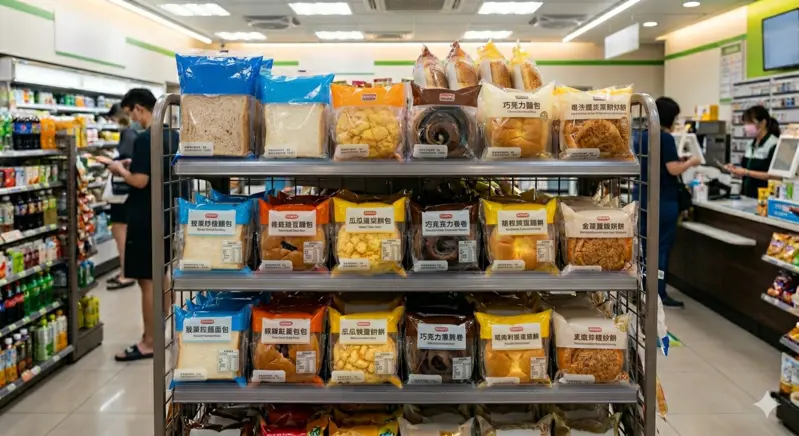
Convenience stores like 7-Eleven and FamilyMart have long made bread and desserts core offerings, tightly integrated with coffee and ready-to-eat meals. From breakfast, afternoon tea set to late-night snacks, baked goods are always available—affordable, quick, and easy to grab during a commute or a short break 2.
At the same time, large retailers such as PX Mart and Carrefour continue to expand their in-house bakery lines. These products are competitively priced and built into everyday shopping habits. Bread has become something people pick up along the way, not something they make a special trip to buy 2.
As baked goods become more accessible, traditional bakeries face increasing pressure. The key challenge now is simple: how to get customers to stay longer, spend more, and improve margins.
From Transactions to Experiences
Bakery cafés are common in many international markets. While their development differs from Taiwan, cities like Seoul—where bakery cafés are widespread—offer useful insight.
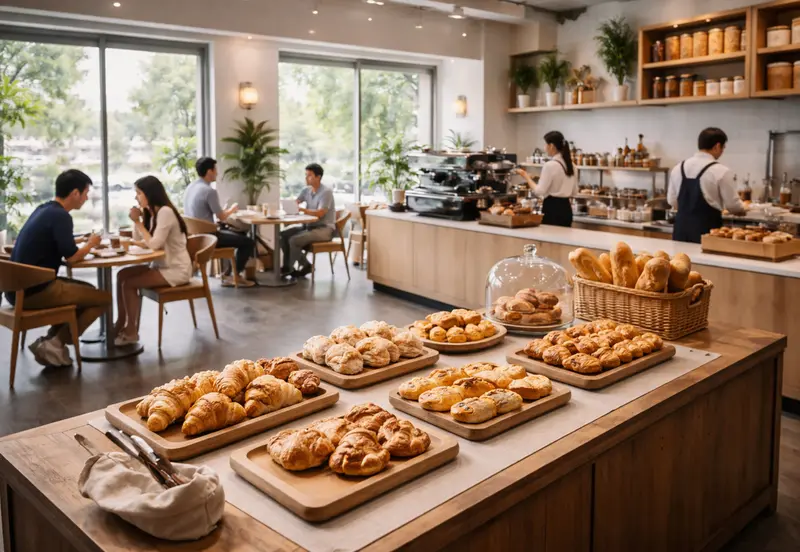
In Seoul, bakery cafés combine bread, coffee, and well-designed spaces. The focus goes beyond the product to the overall environment: cohesive design, good lighting, smooth traffic flow, and consistent branding. These elements create spaces where people naturally want to stay.
Customers aren’t just buying food—they’re also there to spend time and share the experience.
These spaces also serve a social function. Whether meeting friends or working for a while, the experience becomes part of the purchase. The store shifts from a point of sale to a destination.
For Taiwanese operators, this points to a clear direction: as product differences shrink, experience becomes a key competitive factor.
The Trade-Off: More Complexity
Adding dine-in service also makes operations more complex.
What used to be a simple checkout process becomes slower as menus expand. Lines are more likely during peak hours. Staff need to understand not just bread, but also drinks and meals—their ingredients, pricing, and variations. New employees take longer to train.
AI Image Recognition as an Enabler
This is where AI-powered image recognition can help.
When a customer places a tray at checkout, the system can instantly identify the items and send the recognition result to store’s existing POS system. This removes the need for manual input, speeds up transactions, and reduces reliance on experienced staff. New hires can learn faster and make fewer mistakes.
Simplifying checkout also makes staffing more flexible. Employees can step in to support different roles when needed, which helps during busy periods and reduces dependence on specific positions.
This technology isn’t limited to dine-in formats. Grab-and-go bakeries can also benefit—faster checkout means shorter lines and fewer lost sales. It also allows staff to focus more on customer service instead of repetitive tasks.
The Next Competitive Edge: Experience and Efficiency
Taiwan’s bakery industry hasn’t fully shifted to the bakery café model, but the direction is becoming clear.
Retail channels continue to make bread more accessible, reducing the need for consumers to visit traditional bakeries. At the same time, expectations for in-store experience are rising. As stores shift from places to buy to places to spend time, operations must evolve—and efficiency becomes critical.
In this transition, AI image recognition is more than a convenience—it’s a key enabler. The real question for operators is not whether to follow a specific format, but whether they have the tools to adapt—and to capture the next stage of growth.

(The featured image was generated using ChatGPT’s AI tools for illustrative purposes only.)
[Reference]
1 “【烘焙門市正在餐飲化】從麵包店到Bakery Café:餐飲需求與缺工壓力改寫烘焙門市。” 食力 FoodNEXT。https://www.foodnext.net/issue/paper/6111151418.
2 “咖啡配蛋糕!全家、7-11、ㄑ全聯如何搶攻百億「甜點商機」?” 遠見。https://www.gvm.com.tw/article/117206.