

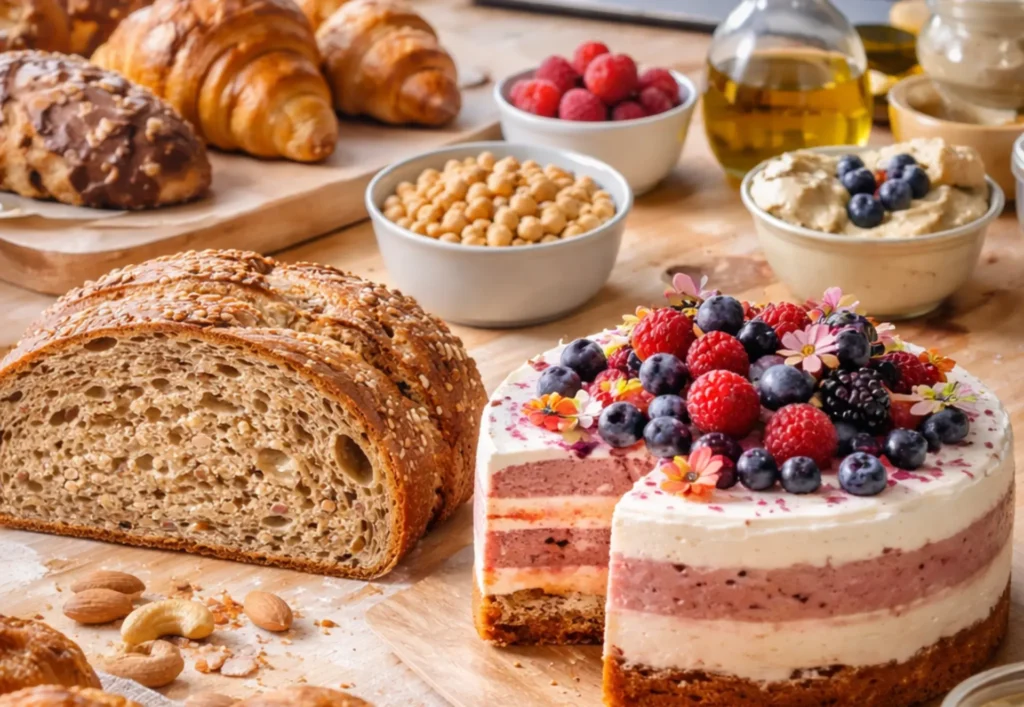
7 Must-Know Bakery Trends for 2026:
Taste, Texture, and Tech in Actio
The baking industry is undergoing a profound structural shift in consumer demand. Building on 2025’s focus on functional ingredients and flavor innovation, the defining keywords for 2026 are multi-dimensional texture, premium portioning, and curated scarcity. As AI transitions from experimental tech to an operational staple, the industry is finally seeing high-tech relief for long-standing pain points in production and storefront management.
By integrating global market intelligence, this analysis identifies the key forces shaping the 2026 bakery landscape and delivers actionable strategies for professionals to stay ahead.
1. Texture Innovation: Layered Sensory Experiences as Brand Signatures
In 2026, texture is no longer a secondary consideration—it is a key driver of repeat purchases. The mantra “flavor draws customers in, texture keeps them coming back” is becoming widely accepted. Research by French bakery brand Délifrance shows that 71% of consumers consider texture their primary source of eating satisfaction 1. Meanwhile, Nestlé USA highlights generational differences: 80% of Millennials and 75% of Gen Z say texture strongly influences their snack choices, underscoring its role as a must-have in bakery product development 2.
Multi-Dimensional Sensory Impact
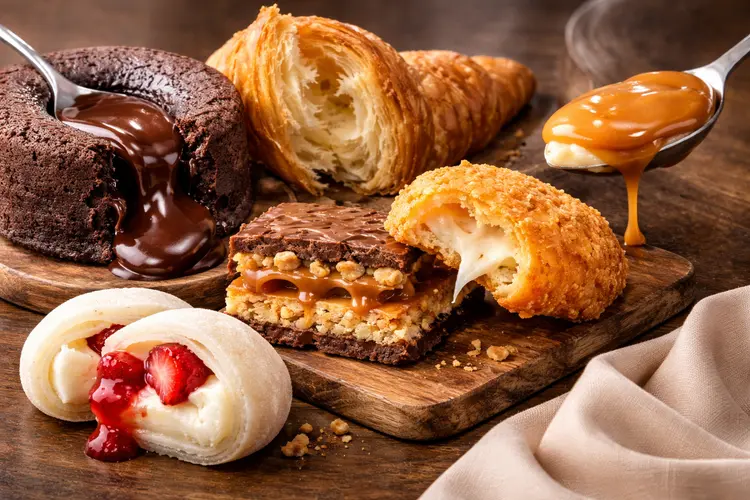
Consumers now seek contrast within a single bite, moving beyond simple soft or crispy textures. Examples include a crunchy shell with a flowing filling or chewy mochi paired with smooth cream. These contrasts—soft vs. crisp, bouncy vs. tender—create strong sensory memories, establishing brand-unique “texture signatures”.
Visual and Auditory Extensions
Texture communicates without words. Visual cues like gooey pull-apart shots, bursting fillings, and ASMR-friendly crisp sounds dominate social media, conveying quality even before tasting. By 2026, discussions around “crispy textures” online are projected to grow 19%, according to Puratos 3.
Consistent Marketing Language
Texture considerations now extend from R&D into marketing. Product names and packaging should emphasize texture descriptors (e.g., “lava-filled, “explosively creamy,” “multi-layered crunch”) to set clear consumer expectations. Standardized processes are equally critical to ensure consistency across every bite.
2. Refined Portioning: The Rise of the Ritual Experience Economy
Changing lifestyles and eating habits are driving small-portion products to the mainstream.
Guilt-Free Indulgence, Anytime
These products satisfy calorie-conscious and health-minded consumers while offering convenience for on-the-go enjoyment. 69% of consumers actively seek portion-controlled snacks 1. Millennials gravitate toward small portions for weight management and eco-conscious food waste reduction 1, with discussions about “perfect portions” expected to grow 15% on social media 3.
Redefining Refinement
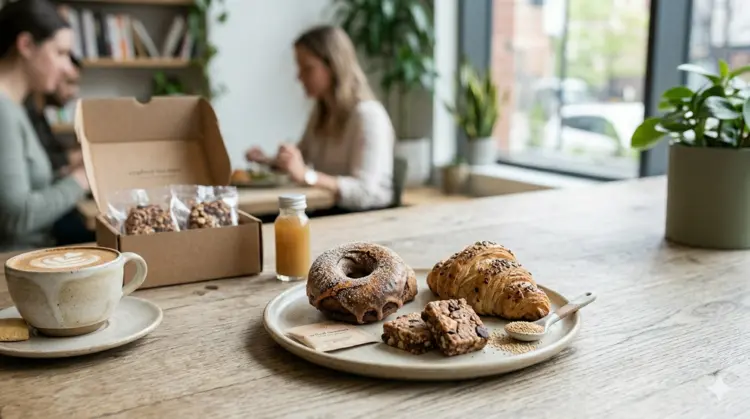
Small portions don’t equal compromise—they offer a refined experience. Thoughtful packaging and design—using terms like mini, petit, or “crafted for one”—enhance the sense of ritual and premium quality.
Low-Risk Flavor Experimentation
Small portions also allow brands to test new flavors with minimal R&D risk, complementing multi-layered textures to maintain a satisfying sensory experience despite reduced size.
3. Health Functionality: Nutrition Becomes Standard
Health-oriented bakery products are moving firmly into the mainstream in 2026, especially those with high protein, low sugar, and high fiber.
Protein Goes Mainstream
High-protein bakery items have expanded beyond fitness markets into everyday consumption. Grand View Research reports the global high-protein bakery market reached US$4.46 billion in 2024 and is projected to hit US$6.69 billion by 2030, growing at a 7% CAGR from 2025 to 20230 4.
Taste Remains Non-Negotiable
Consumers expect health without sacrificing flavor. Bakers are responding with “better-for-you” reinventions of familiar favorites—such as high-protein cakes or low-sugar cookies—enabling a seamless transition to healthier living without compromising daily eating habits.
Sourdough Renaissance
Sourdough, with its natural fermentation, health benefits, and complex flavors, is gaining renewed attention. Discussions on sourdough have surged 158% year-over-year 1, and searches for “sourdough bread near me” jumped 178% in Q2 2025 3. Innova Market Insights also found a 22% increase in bakery launches with digestive health claims in 2024 5.
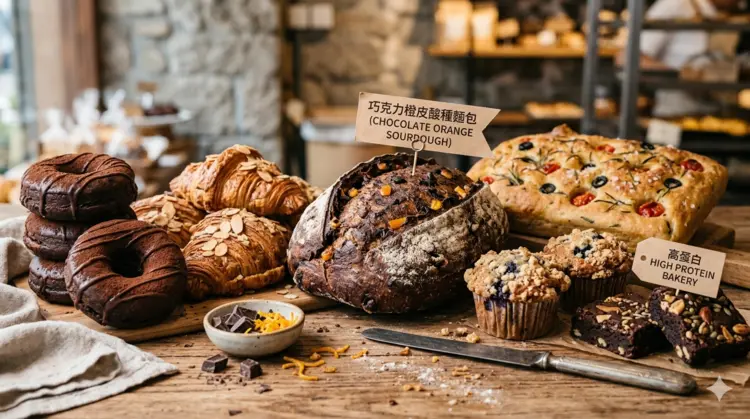
Sourdough techniques are now being applied to donuts, croissants, focaccia, and even sweet formats like chocolate-orange sourdough—positioning it as a symbol of both flavor and wellness in 2026.
4. Global Flavor Fusion & Elevated Nostalgia: Surprise Within Familiarity
Fusion of Global Flavors
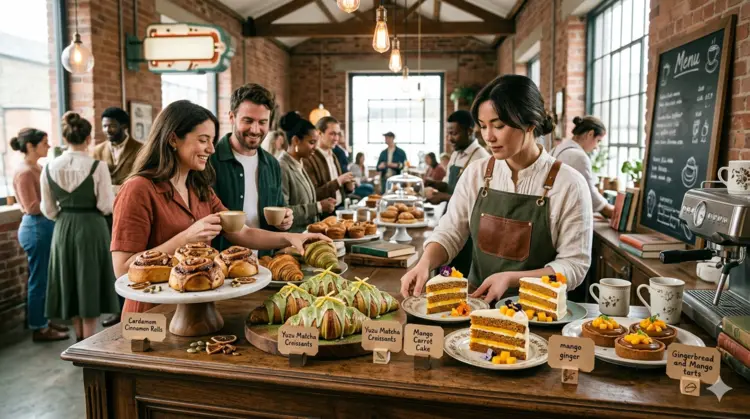
According to Taste Tomorrow, 46% of consumers actively seek cross-cultural flavor pairings 6, from Middle Eastern cardamom and saffron to East Asian yuzu and matcha. The key is balancing novelty with familiarity: introducing exotic elements into recognizable products—like cardamom cinnamon rolls or yuzu matcha croissants—reduces trial barriers and encourages repeat purchases.
Nostalgic but Elevated
Consumers continue to embrace nostalgic flavors, now reimagined with premium ingredients, refined presentation, and innovative textures. Finsbury Food Group labels this trend “Nostalgic but Elevated 7.”
Examples include classic carrot cake with tropical mango, or spiced winter favorites like gingerbread-inspired desserts with mango accents. By offering a “familiar with a twist” experience, this approach evokes emotional connections while easing consumer decision-making. Also, it serves as a reliable yet creative strategy to boost product acceptance in an increasingly competitive market.
5. Plant-Based Baking: Rising as a “Sensory First” Choice
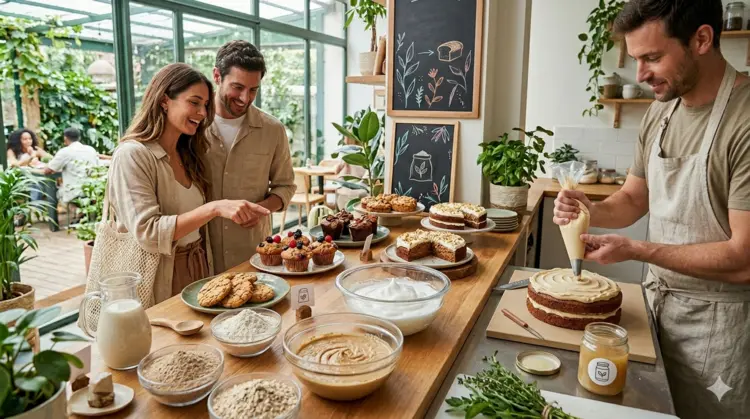
Plant-based bakery products are moving from niche to mainstream, driven not only by vegans but also by health-conscious flexitarians and advances in ingredients and techniques 8.
Technological Advances Close the Gap
Innovations like aquafaba replacing eggs or cashew butter for creamy textures now deliver plant-based products nearly indistinguishable from traditional baked goods. Blind taste tests confirm that cookies, brownies, and muffins can rival conventional textures 8, establishing plant-based items as a core line in many brands.
Shifting Communication Strategies
Marketing now emphasizes visual appeal and lifestyle sophistication rather than preaching health or environmental benefits, positioning plant-based treats as stylish, vibrant choices 1. Success depends on balancing sustainability, taste, and attractiveness so consumers choose effortlessly.
6. Social-First Design & Limited-Time Strategies
Designed for Social
In the digital age, bakery products are also content. Items that are visually striking, shareable or are ASMR-friendly more likely to go viral and drive sales. Early design should consider cross-sections and dynamic presentation, with each detail contributing to shareability and brand conversation 1, 2, 3, 6.
Scarcity and Collaboration
Time-limited offerings remain powerful sales drivers. More brands are embracing limited-edition and cross-industry collaborations, along with pop-up launches, using smaller portions to experiment with new ideas and keep consumer excitement high 1, 9.
7. Continued Digitization and Automation: The Inevitable
Automation for Consistency
By 2030, the bakery industry may face a shortfall of over 50,000 workers. Automated mixers, fermentation chambers, and smart ovens free skilled bakers from repetitive tasks, allowing focus on creative development 8.
Ready-to-Bake & Frozen Solutions
Scaling from scratch is no longer viable. High-quality ready-to-bake dough and frozen semi-finished products enable consistent quality across multiple locations, while supporting agile production. By leveraging pre-mixes and frozen solutions, brands can rapidly introduce trending flavors without long R&D cycles 6.
AI Image Recognition: Optimizing Front- and Back-of-House Operations
AI can identify products by shape and color at checkout, speeding transactions, reducing errors, and freeing staff for customer engagement 10. In production, AI monitors dough fermentation, alerts bakers when optimal, and adjusts baking parameters, ensuring consistent quality from prep to sale.
Baking for the Next Era: 2026 Trends in Action
In 2026, successful bakeries will master the balance between innovation and consistency. Layered textures, refined portions, and plant-based creations create memorable sensory experiences, while AI-powered production and smart front-of-house systems (AI checkout system) ensure operational excellence.
Yet technology alone is not enough. Emotional connection—through familiar flavors with a twist, curated small-batch rituals, or shareable moments—remains central to winning loyalty. The future belongs to those who combine data-driven precision with sensory creativity, transforming every bite into a story that consumers will remember and share.
(The featured image was generated using ChatGPT’s AI tools for illustrative purposes only.)
[References]
1 “Trendspotter alert: 6 blockbuster bakery trends to follow in 2026!” Délifrance. https://delifrance.com/blog/post/6-bakery-trends-to-follow-in-2026.
2 “10 texture trends that will define bakery & snacks in 2026.” Bakery & Snacks. https://www.bakeryandsnacks.com/Article/2026/01/13/10-texture-trends-that-will-define-bakery-snacks-in-2026/.
3 “How food brands can capitalize on the hottest consumer trends.” Puratos. https://www.puratos.com/blog/how-food-brands-can-capitalize-on-the-hottest-consumer-trends0.
4 “High Protein Bakery Products Market (2025 – 2030).” Grand View Research. https://www.grandviewresearch.com/industry-analysis/high-protein-bakery-products-market-report.
5 “Bakery Trends 2025: Global Market Overview.” Innova Market Insights. https://www.innovamarketinsights.com/trends/bakery-trends-2025/.
6 “5 Bakery Trends Shaping the Bakery Industry in 2026.” Chewco. https://www.chewco.co/5-Bakery-Trends-2026.
7 “Bakery Flavour Trends 2026: From Matcha and Miso to Elevated Nostalgia.” Finsbury Food Group. https://finsburyfoods.co.uk/british-baker-flavour-trends/.
8 “2026 Bakery Trends: What’s Changing in Commercial Baking.” Plastic Container City. https://plasticcontainercity.com/blog/post/2026-bakery-trends-whats-changing-in-commercial-baking.
9 “Top bakery trends for Easter 2026 revealed.” British Baker. https://bakeryinfo.co.uk/finished-goods-reports/pastels-puddings-and-playfulness-top-bakery-trends-for-easter-2026-revealed/715942.article#toggle.
10 “Checkout Clicks Drop from 3,200 to 480: How AI Lets Humans Focus on What Only Humans Can Do.” Viscovery. https://viscovery.com/en/how-ai-lets-humans-focus-on-what-only-humans-can-do/.